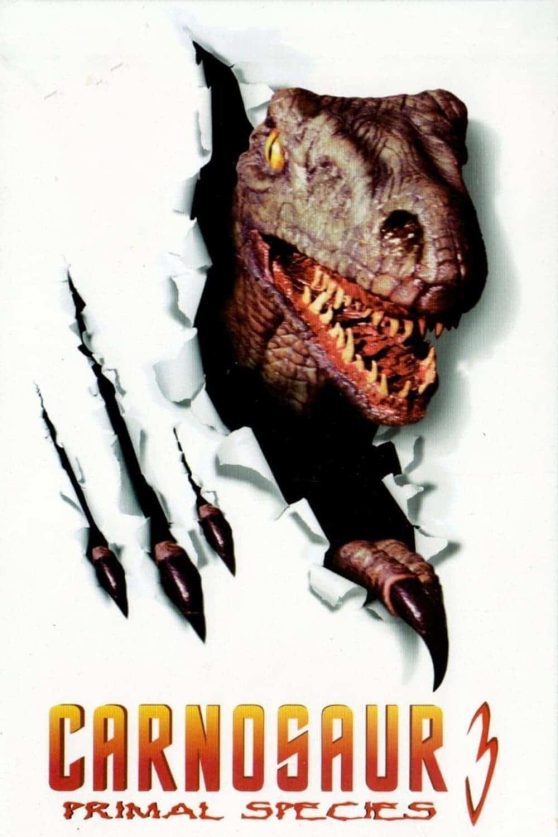
Black-clad terrorists steal what they think is uranium, presumably from the mining operation in Carnosaur 2 (1995), but in fact, they stole frozen velociraptors. There is also a frozen T-Rex. They all escape, and an army SWAT team is sent do deal with them, but they can’t kill them. No, for some reason they have “regenerative DNA structure” which holds the answer to the cures of many an ailment.
Side note: every organism on earth has regenerative DNA. What the screenwriter was trying to say was that the carnosaurs have the ability to regenerate lost tissue, like Deadpool.
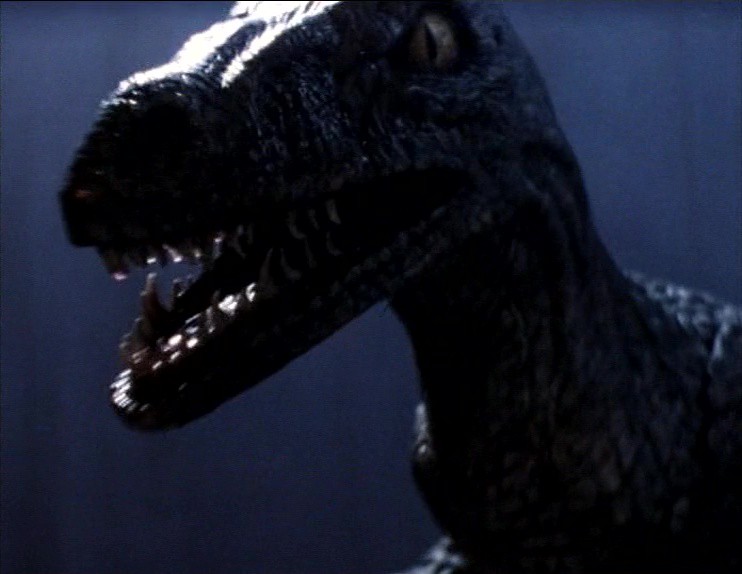
The first film, Carnosaur (1993), had one of the stupidest plots ever filmed, while Carnosaur 2 (1995) was a straight up low-budget remake of Aliens (1986) with velociraptors instead of xenomorphs. Both had a high level of entertainment value because and very cheap looking dinosaurs. This third one fails to bring joy. It continues with the “army vs dinosaurs” motif from the second film, but it’s mostly just army guys planning, looking around, and searching with only glimpses of them being hacked into pieces by dinos.
What makes matter worse, is that it steals a tune from the theme of Predator (1987), which reminds us of an actually good monster flick. The fact that it’s boring is the death knell for the film. The dinosaurs are still just guys in cheap rubber suits, but since nothing around that is entertaining it ain’t funny, it’s just sad.